

Does Cheap Drugstore Skincare Actually Work?
TL;DR: Yes — cheap drugstore skincare actually works, and the science backs it up. Active ingredients like retinol, niacinamide, and hyaluronic acid perform based on their concentration and formulation stability, not the price tag or brand name on the label. For most everyday skincare needs, drugstore options deliver results comparable to products costing five to ten times more.
Cheap drugstore skincare works — and there’s ingredient science to back that up. You don’t need a $90 vitamin C serum to get brighter skin. You need the right concentration of L-ascorbic acid, regardless of which brand makes it. That shift in thinking is what separates smart shoppers from overspending ones.
This guide gives you the honest breakdown: why the doubt exists, what actually makes skincare effective, and exactly where to put your money for real results.
The Real Reason People Doubt Drugstore Skincare (And Why That Doubt Is Mostly Marketing)
The skepticism around budget skincare isn’t accidental — it was built by the beauty industry on purpose.
Prestige brands invest heavily in packaging, celebrity partnerships, and aspirational advertising. The message is consistent: luxury equals effectiveness. When a moisturizer costs $150, your brain is primed to believe it must work better. That’s not logic. That’s positioning.
Here’s what actually happens behind the scenes: many high-end and drugstore products share manufacturing suppliers, base formulas, and even identical active ingredients. A $12 CeraVe moisturizing cream and a $68 La Mer cream both use occlusive and humectant ingredients to lock in moisture. The difference is largely in fragrance, marketing spend, and packaging design — not clinical performance.
Dermatologists have noticed this for years. Brands like CeraVe, Neutrogena, and La Roche-Posay were built with dermatologist input from the start. They’re not “budget brands.” They’re clinical brands with accessible price points. Learning to read ingredient labels to compare products directly is the single most powerful shift you can make as a skincare shopper.
The doubt was marketed into you. It can be unlearned.
What Actually Makes a Skincare Product Work? (It’s the Ingredients, Not the Price Tag)
Skincare efficacy comes down to three things: the right active ingredient, a stable formulation, and a concentration that actually does something.
Price has nothing to do with any of those three.
Active Ingredients Are the Whole Story
An active ingredient is the component that produces a measurable skin change. Retinol speeds up cell turnover. Niacinamide reduces redness and minimizes pores. Glycolic acid exfoliates dead skin. Hyaluronic acid pulls moisture into the skin.
These molecules don’t become more powerful because they’re sold in a sleek black bottle. Retinol at 0.1% does the same thing in a $9 RoC formula as it does in a $75 SkinCeuticals product. What matters is that the percentage is effective, the formula is stable, and you use it consistently.
What to Look for on the Label
Ingredients are listed in descending order by concentration. The first five to seven ingredients make up the bulk of the formula. If the “star” ingredient — say, vitamin C — appears near the bottom of a long list, you’re paying for marketing, not results.
Train yourself to read labels, not prices. That skill is worth more than any single product purchase.
Which Drugstore Skincare Products Actually Work? A Category-by-Category Breakdown
Not every product category performs equally at the drugstore level. Some are outstanding. Some are better left to higher budgets. Here’s the honest breakdown:
| Product Category | Drugstore Performance | Notes |
|---|---|---|
| Cleansers | Excellent | Simple formulas work best; avoid harsh sulfates |
| Moisturizers | Excellent | CeraVe, Vanicream, and Eucerin rival any prestige cream |
| Sunscreen | Excellent | SPF protection is FDA-regulated; efficacy is consistent |
| Retinol treatments | Very Good | RoC and Neutrogena deliver proven results |
| Niacinamide serums | Very Good | High-concentration options widely available at low prices |
| Vitamin C serums | Good | Stability is the challenge; look for L-ascorbic acid in dark packaging |
| Chemical exfoliants | Good | Glycolic acid toners from Pixi or Alpha Skin Care perform well |
| Eye creams | Mixed | Often overpriced at any tier; a good moisturizer covers most needs |
| Prescription-grade actives | Not applicable | Tretinoin requires a prescription regardless of brand |
The categories that matter most for a baseline routine — cleanser, moisturizer, SPF, and a targeted treatment — are all categories where drugstore products genuinely shine.
How Do You Build a Full Skincare Routine on a Budget Without Sacrificing Results?
A high-performing budget routine has four core steps. Keep it simple. Consistency beats complexity every time. The goal is to build your routine around proven actives that have clinical evidence behind them — not around trending ingredients or premium packaging.
Step 1: Cleanser (Morning + Evening)
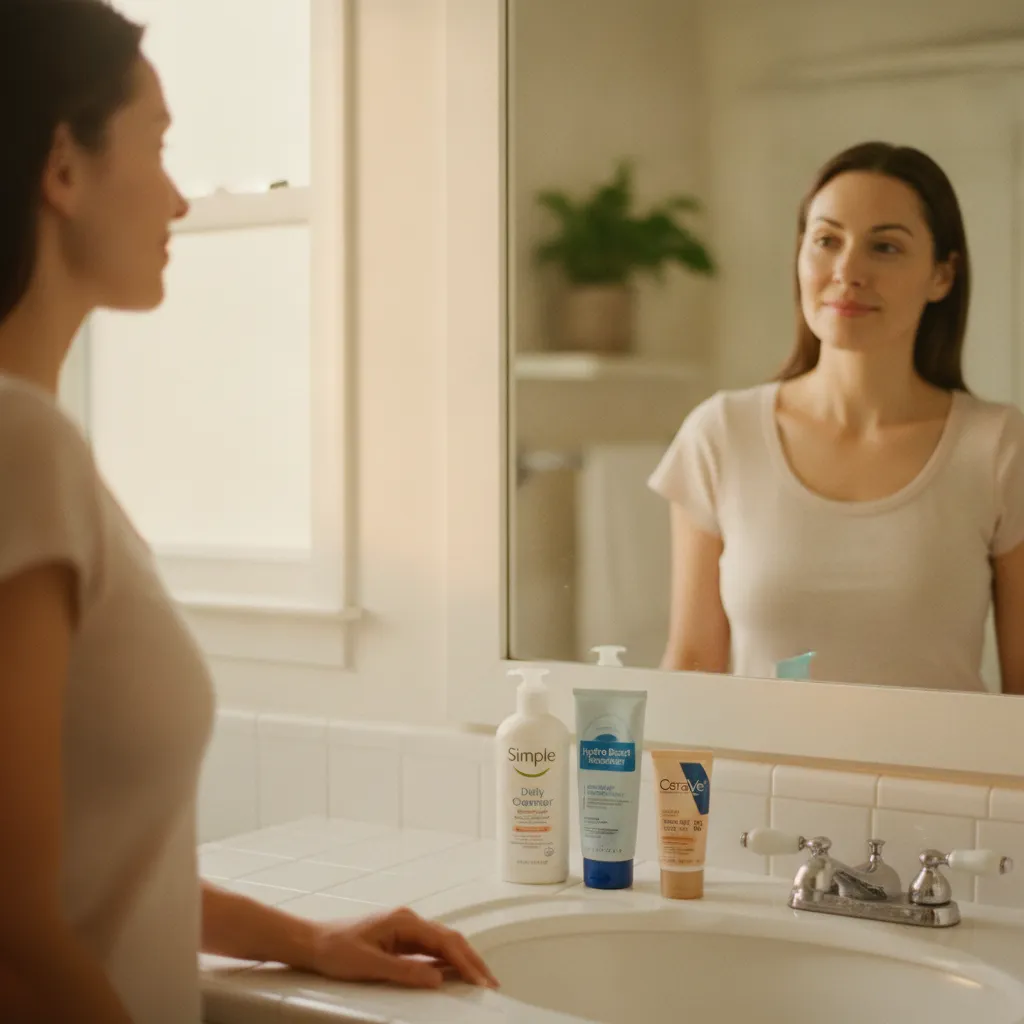
Use a gentle, fragrance-free cleanser. CeraVe Hydrating Cleanser and Vanicream Gentle Facial Cleanser are both under $15 and trusted by dermatologists for sensitive and normal skin types. Avoid anything that leaves your skin feeling tight — that’s barrier damage, not cleanliness.
Step 2: Treatment Serum (Evening, or as directed)
Pick one targeted active based on your primary concern:
- Dullness or uneven tone: Niacinamide 10% (The Ordinary, ~$6)
- Fine lines and texture: Retinol 0.1%–0.3% (RoC Retinol Correxion, ~$18)
- Acne-prone skin: Salicylic acid 2% (Neutrogena Oil-Free Acne Wash or Paula’s Choice BHA, ~$10–$30)
Start slowly with actives — three nights a week for the first month. Your skin needs time to adjust.
Step 3: Moisturizer (Morning + Evening)
Apply moisturizer while skin is slightly damp to lock in hydration. CeraVe Moisturizing Cream works for most skin types and contains ceramides, hyaluronic acid, and niacinamide in a single formula. It costs around $16 for a large tub that lasts months.
Step 4: SPF (Every Morning, No Exceptions)
Daily SPF is the single most evidence-backed anti-aging step you can take. Neutrogena Hydro Boost SPF 50 and EltaMD UV Clear are both accessible options. UV damage is the leading cause of premature aging — skipping SPF makes every other product less effective. SPF ratings are regulated by the FDA, meaning a drugstore SPF 50 delivers the same UV protection as a luxury SPF 50 when applied correctly.
Estimated monthly cost of this full routine: $20–$45.
The Drugstore Skincare Products Dermatologists and Beauty Experts Actually Recommend
Dermatologists are consistent in their drugstore recommendations. These brands appear repeatedly in clinical guidance and expert interviews:
CeraVe — Developed with dermatologists and formulated with essential ceramides. The Moisturizing Cream, Hydrating Cleanser, and SA Smoothing Cleanser are all staples in dermatologist-recommended routines.
Neutrogena — The Rapid Wrinkle Repair Retinol range and Hydro Boost line have decades of clinical backing. The brand has funded independent research on its formulations.
La Roche-Posay — Particularly trusted for sensitive and reactive skin. The Toleriane range and Cicaplast Baume B5 are routinely recommended for post-procedure skin and eczema-prone complexions.
The Ordinary — Disrupted the industry by listing exact ingredient concentrations on every product. You know precisely what you’re getting and at what strength. Their Niacinamide 10% + Zinc 1% serum is one of the most-recommended budget skincare products globally.
Pixi Beauty — The Glow Tonic (glycolic acid toner) is a longtime favorite for chemical exfoliation at an accessible price point.
These aren’t compromises. They’re the products experts actually use and suggest to patients.
Smart Shopping: How to Find Trusted Budget Skincare Picks Without the Guesswork
Finding reliable budget skincare recommendations takes strategy. The beauty industry produces thousands of products a year, and marketing noise makes it hard to filter signal from hype.
Stick to Ingredient-First Research
Before buying any product, look up the key active it claims to contain. Search “[ingredient name] + study” or “[ingredient name] + dermatologist” to find credible evaluations. The American Academy of Dermatology publishes ingredient guidance without brand bias and is a reliable starting point for evidence-based skincare research.
Ignore Before-and-After Advertising
Before-and-after photos in ads are almost never representative of typical results. They’re often produced under controlled lighting, with makeup, or with extreme filtering. Trust peer-reviewed ingredient data, not brand photography.
Use Ingredient Checkers
Use ingredient checkers like INCI Decoder or CosDNA to paste in a product’s ingredient list and get a plain-language breakdown of what each ingredient does and whether there are any known irritants. Use them before you buy, not after.
Read Real Reviews Critically
Look for reviews that describe specific skin types and timelines. A review that says “my dry, sensitive skin improved texture within six weeks of consistent use” gives you more information than “love this product!” Verified purchase reviews on retail platforms tend to be more reliable than brand-site testimonials.
Buy Single-Active Products First
If you’re new to actives, start with products that contain one key ingredient rather than complex multi-active formulas. It’s easier to track what’s working — and what isn’t — when you introduce changes one at a time.
Smart shopping is a skill. Build it once, and you’ll waste far less money on products that don’t suit your skin.
Frequently Asked Questions
Q: Can cheap drugstore skincare actually replace expensive skincare products?
For most everyday skincare needs — cleansing, moisturizing, sun protection, and targeted treatments — drugstore products with equivalent active ingredients perform comparably to premium alternatives. The clinical difference between a $12 and a $90 moisturizer is rarely meaningful when both contain the same core actives at similar concentrations. Where premium products may offer marginal advantages is in texture, fragrance complexity, or proprietary delivery systems, none of which affect core efficacy for most skin types.
Q: Which drugstore skincare ingredients are actually backed by science?
The most clinically supported drugstore-accessible ingredients include retinol (proven for cell turnover and fine line reduction), niacinamide (brightening, pore minimization, barrier support), hyaluronic acid (humectant hydration), salicylic acid (acne and congested pores), and glycolic acid (chemical exfoliation). Each of these has decades of peer-reviewed research behind it and is widely available in affordable formulations. Ingredient efficacy is determined by concentration and formulation stability — not the price point of the brand selling it.
Q: How long does it take for drugstore skincare to show visible results?
Most active ingredients require four to twelve weeks of consistent daily use before measurable results are visible. Retinol typically shows noticeable improvement in texture and fine lines after six to twelve weeks; niacinamide may produce visible tone changes in four to eight weeks. Patience and consistency matter far more than switching products frequently — starting with lower concentrations and building up gradually reduces irritation and improves long-term results.
Q: Does drugstore sunscreen actually protect skin as well as high-end SPF?
Yes. SPF ratings in the United States are regulated by the FDA, meaning a drugstore SPF 50 provides the same level of UV protection as a luxury SPF 50 when applied correctly. The main differences in premium sunscreens are typically cosmetic — lighter texture, less white cast, or added skincare actives — not superior UV blocking. The best sunscreen is the one you’ll apply consistently every morning, regardless of price.
Q: Is it safe to use drugstore retinol, or do you need a prescription-strength version?
Over-the-counter drugstore retinol is safe for most adults when introduced gradually, starting at lower concentrations (0.025%–0.1%) three nights per week. It converts to retinoic acid in the skin and produces measurable anti-aging and texture benefits, though more slowly than prescription tretinoin. Prescription-strength tretinoin is more potent and faster-acting but also more likely to cause initial irritation — drugstore retinol is a clinically valid and gentler starting point for most people.
Q: What should you look for on a drugstore skincare label to know if a product actually works?
Ingredients are listed in descending order by concentration, so the first five to seven ingredients make up the bulk of the formula. If the “star” active — such as vitamin C or retinol — appears near the bottom of a long list, it is present in a concentration too low to produce results. Look for products where the key active appears in the top half of the ingredient list, and cross-reference the concentration against research-supported effective ranges before purchasing.
Q: Why do dermatologists often recommend drugstore skincare brands over luxury alternatives?
Dermatologists tend to prioritize formulation integrity, ingredient evidence, and patient compliance over brand prestige. Brands like CeraVe, La Roche-Posay, and Neutrogena were developed with direct dermatologist input and have accumulated clinical backing through independent research. Their accessible price points also support consistent daily use — a critical factor since even the most effective ingredient only works if it is used regularly over time.
Ready to build your budget skincare routine with products that actually work? Browse editor-curated drugstore skincare picks and shop the best affordable finds — all in one place. Shop Now at Affiliate Shoping.